[ Blog ]
Six Months, One Developer, and a Lot of Broken Puzzles: Making Freedom Call
August 17, 2026
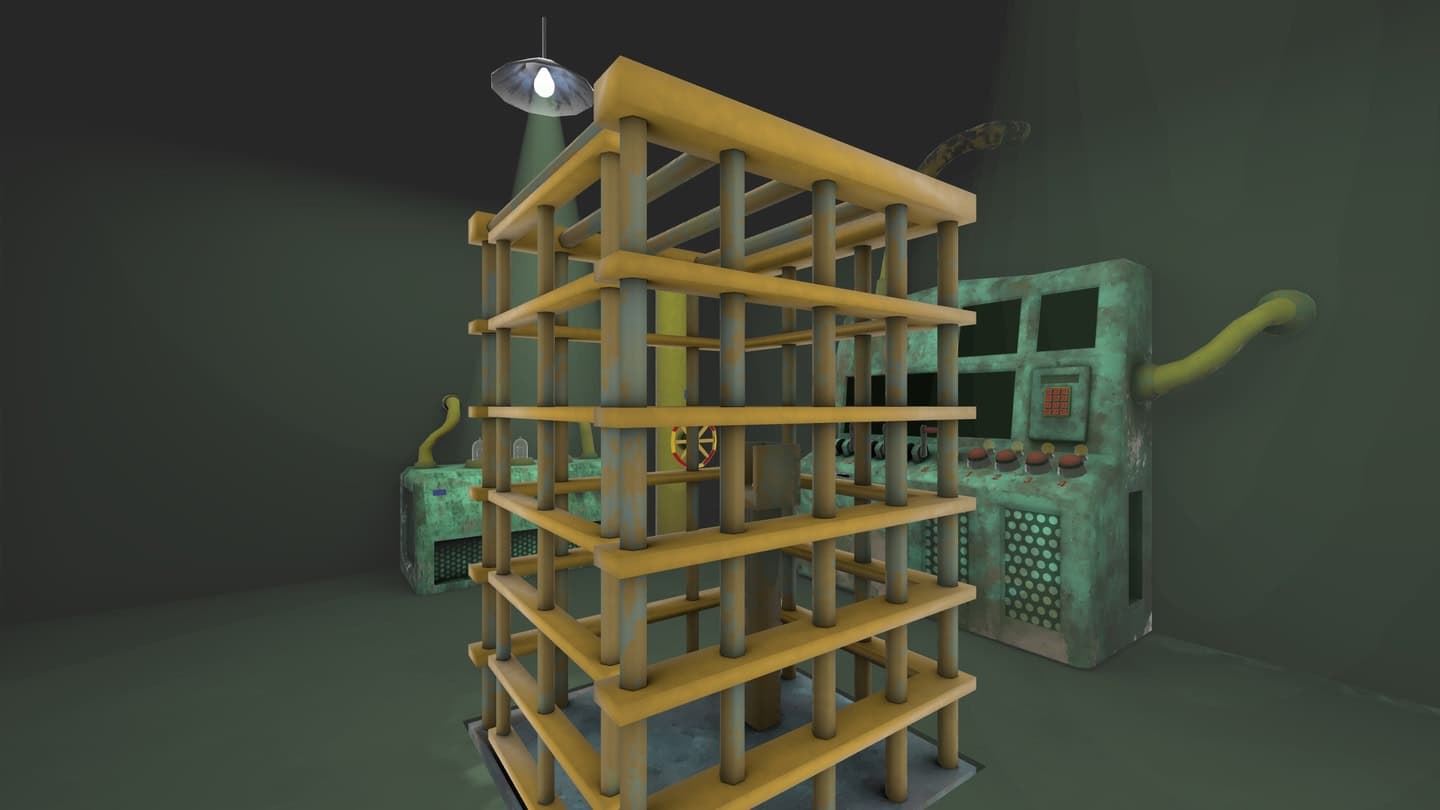
Freedom Call started as a loose "what if" — a prisoner, alone, trapped somewhere in the middle of the ocean. There was a light influence from Jules Verne's The Mysterious Island in there too: that same feeling of being cut off from everything, having to figure out your surroundings with nothing but your own head and whatever's lying around. That's really where the steampunk fortress came from — not a genre choice made first, but a mood I was chasing, that then needed a world to live in.
I built the whole thing solo — no team, just me, over a bit more than six months. That has upsides (nobody to disagree with about the vision) and one very specific downside: puzzle design.
The hardest part: making the puzzles actually fit together
Individually, puzzles are easy enough to design. The hard part was making them fit into one coherent whole — difficulty that ramps up sensibly, mechanics introduced in one room that pay off three rooms later, nothing that feels like a non-sequitur dropped in because it seemed cool at 2am. With no one else to playtest ideas against in real time, I spent a lot of the six months redesigning puzzle sequences that worked fine in isolation but fell apart the moment they had to connect to everything around them.
The cell, the cafeteria, the dormitory, the command block, the underwater room — each needed its own internal logic, but also had to feel like part of the same prison, built by the same steampunk logic, guarding the same secret.
The moment it finally clicked
The single most satisfying moment of the whole project wasn't a specific puzzle or the airship finale — it was the first time I sat down and played the entire game start to finish, as a player would, and it actually worked. No soft-locks, no puzzle that only made sense because I already knew the answer, no dead ends. Just a prisoner escaping a fortress, one room at a time, the way it was supposed to feel from the very first version of the idea.
Freedom Call is available now on Meta Quest 2, 3, and Pro.